.png)
How much does a private jet to Tokyo cost?
Charter rates to Tokyo range from $25,000 to $220,000+ depending on aircraft category and departure city. Regional flights from Hong Kong or Seoul start from $25,000 to $40,000 on a heavy jet. From Singapore, approximately $50,000 to $70,000. From Los Angeles or New York, $120,000 to $200,000+ on an ultra-long-range jet. Tokyo is served by 2 airports for private aviation: Haneda (HND) and Narita (NRT).
Airports for private jet charter in Tokyo.
Tokyo offers two international airports for private jet operations, with Haneda providing the closest access to the city center and the most efficient business aviation experience.
- Tokyo Haneda Airport (HND / RJTT): Located 14 kilometres south of central Tokyo. The preferred airport for private aviation with dedicated business aviation facilities operated by FBO operators. Closest airport to Roppongi, Ginza, Marunouchi and the financial district (30-40 minutes by car). Customs, immigration and quarantine (CIQ) processing available for international private jet arrivals. Slot availability for business aviation is limited and must be secured in advance through JCAB (Japan Civil Aviation Bureau).
- Narita International Airport (NRT / RJAA): Located 60 kilometres east of central Tokyo in Chiba Prefecture. A dedicated business aviation handler manages private jet operations. Longer ground transfer to central Tokyo (60-90 minutes depending on traffic) but fewer slot restrictions than Haneda. Required for some ultra-long-range aircraft and as backup when Haneda slots are unavailable. 24-hour CIQ facilities.
Recommended aircraft for charter flights to Tokyo.
Japan's strict slot allocation system for business aviation at Haneda means early planning is essential. Aircraft selection is driven by route distance, slot availability and Japan's specific regulatory requirements for foreign-registered aircraft.
- Regional East Asian routes (2-4 hours): Heavy jets such as the Challenger 604, Gulfstream G450 or Legacy 650 cover Seoul (2 hours), Shanghai (2 hours 45 minutes), Hong Kong (4 hours), Taipei (3 hours) and Manila (4 hours). Midsize jets can serve shorter routes but heavy jets are preferred for the cabin comfort expected on Japanese corporate travel.
- Medium-haul routes (5-8 hours): Heavy and super-long-range jets such as the Gulfstream G550, Global 6000 or Falcon 7X serve Singapore (6 hours 30 minutes), Bangkok (6 hours), Mumbai (8 hours) and Sydney (9 hours with a technical stop).
- Transpacific and intercontinental routes (10+ hours): Ultra-long-range jets such as the Global 7500, Gulfstream G650 or Falcon 8X are required for Los Angeles (11 hours), New York (13 hours with a fuel stop in Anchorage or Hawaii) and London (12 hours with a fuel stop). Lie-flat sleeping arrangements and full galley service are essential for these crossings.
Charter pricing to Tokyo by route and aircraft type.
Tokyo charter pricing reflects Japan's premium business aviation market, strict slot allocation requirements and the distances involved for transpacific crossings. Regional Asian routes offer the most competitive rates.
Tokyo's premium market positioning and strict slot requirements are reflected in pricing, with regional East Asian routes offering the most accessible entry point for charter clients.
Japan's JCAB slot allocation for business aviation at Haneda is limited and must be applied for in advance, adding lead time requirements that affect availability and cost. Positioning costs are higher than in Europe or the US because the business aviation fleet based in Japan is smaller relative to demand. Pricing increases during Golden Week (late April-early May), cherry blossom season (late March-mid April), the Tokyo Motor Show and major corporate events. Landing and handling fees at Japanese airports are among the highest globally.
Empty legs involving Tokyo are less frequent than on US or European corridors but do occur on the Hong Kong-Tokyo and Singapore-Tokyo routes when aircraft reposition after executive drop-offs. Seasonal repositioning between Tokyo and resort destinations (Okinawa, Niseko/Sapporo for skiing) also generates opportunities. Broker partners with Asian operator networks can alert you when availability matches your dates.
- Seoul to Tokyo on a heavy jet: approximately 2 hours, from $25,000 to $35,000.
- Shanghai to Tokyo on a heavy jet: approximately 2 hours 45 minutes, from $28,000 to $40,000.
- Hong Kong to Tokyo on a heavy jet: approximately 4 hours, from $35,000 to $50,000.
- Singapore to Tokyo on a heavy jet: approximately 6 hours 30 minutes, from $50,000 to $70,000.
- Dubai to Tokyo on an ultra-long-range jet: approximately 10 hours, from $90,000 to $130,000.
- Los Angeles to Tokyo on an ultra-long-range jet: approximately 11 hours, from $120,000 to $170,000.
- New York to Tokyo on an ultra-long-range jet: approximately 13 hours, from $160,000 to $220,000.
- London to Tokyo on an ultra-long-range jet: approximately 12 hours, from $150,000 to $200,000.
Ground transport and VIP arrival in Tokyo.
Haneda's business aviation terminal offers private CIQ processing, VIP lounges and covered vehicle staging. The experience is efficient and formal, reflecting Japanese service standards. Immigration and customs clearance for private jet passengers is typically completed within 15-20 minutes. From Haneda, central Tokyo (Roppongi, Ginza, Marunouchi) is 30-40 minutes by luxury sedan. From Narita, central Tokyo is 60-90 minutes by car or 55 minutes by dedicated express vehicle on the expressway. Broker partners coordinate luxury sedan transfers (typically Toyota Alphard or Century) through Japanese ground transport operators. Helicopter transfers from Narita to downtown Tokyo helipads are available but limited by urban airspace restrictions.
Why charter clients choose Tokyo.
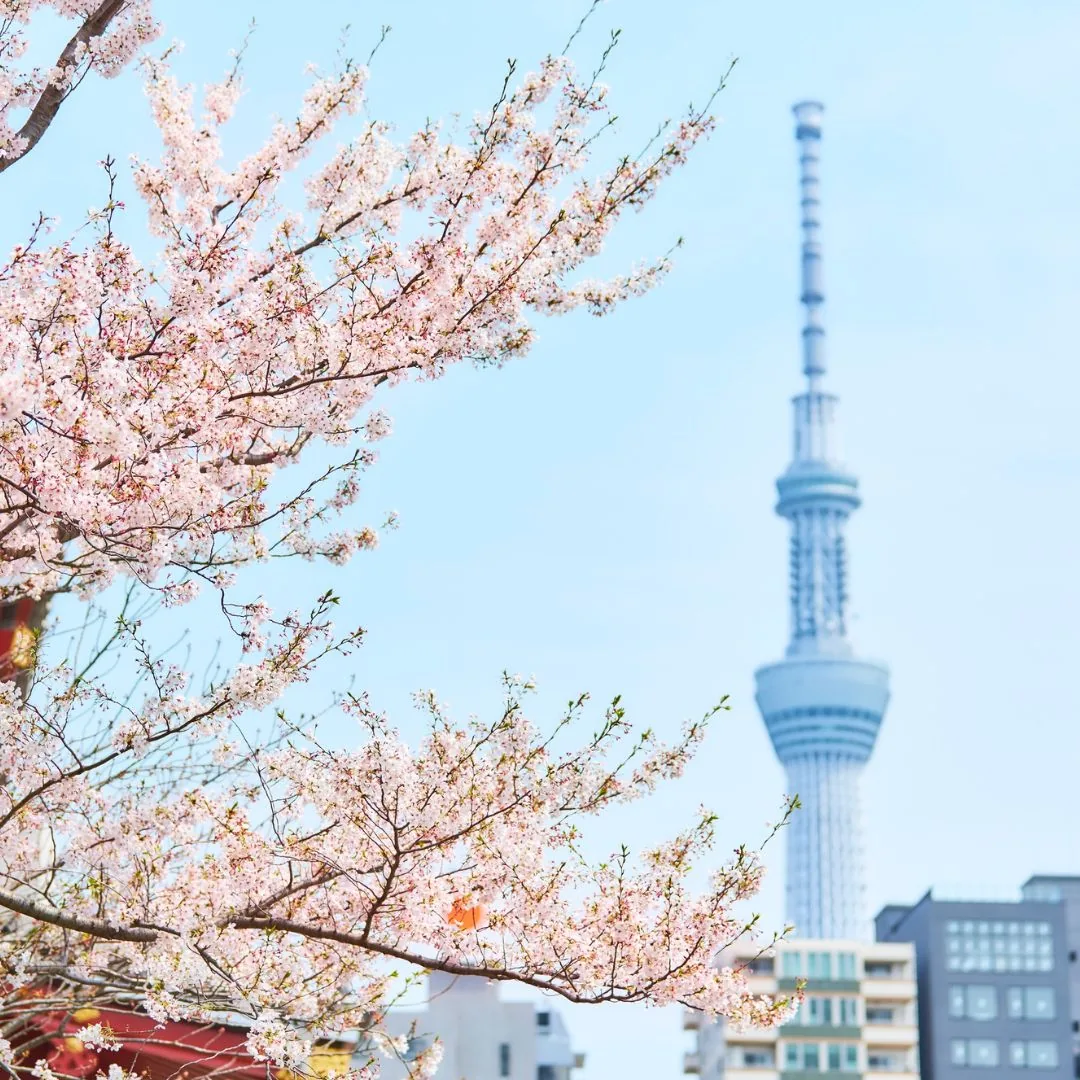
Tokyo is the world's largest metropolitan economy, home to the headquarters of Toyota, Sony, Mitsubishi, SoftBank and hundreds of major corporations. Corporate charter demand is driven by executive travel between Tokyo, Hong Kong, Singapore, Shanghai and Seoul, as well as transpacific flights connecting Japanese business interests with the United States and Europe. Cherry blossom season (late March to mid-April) draws luxury leisure travelers, while the city's Michelin-starred dining scene (more stars than any other city in the world), contemporary art galleries and luxury retail attract high-net-worth visitors year-round. Niseko and Hokkaido ski resorts are accessible by short domestic charter from Tokyo. Peak charter demand runs during Golden Week (late April-early May), cherry blossom season, autumn foliage season (November), year-end corporate travel and major international conferences. Haneda slot availability is tightest during these periods and requires early application through the broker partner.